
Paxtibi is not affiliated with, endorsed by, or acting on behalf of the NCAA, the Power Five conferences, Class Counsel, or the House Settlement claims administrator. Nothing on this page is legal or tax advice.
Did you play Division I sports between June 2016 and September 2024? Then you are probably part of the House v. NCAA settlement class.
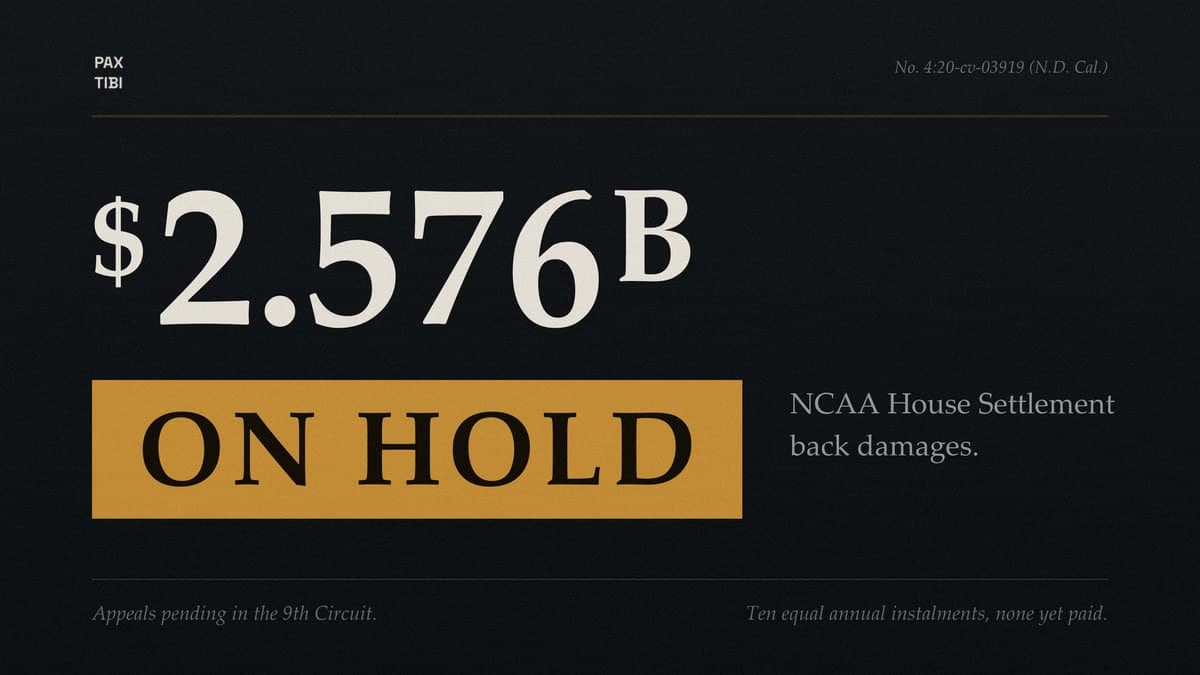
The NCAA and the Power Five conferences agreed to pay $2.576 billion. A federal court had found their old NIL (Name, Image, Likeness) rules illegal. Most eligible athletes got a notice by email or postcard in 2024 or 2025, and the deadline to file was October 1, 2025.
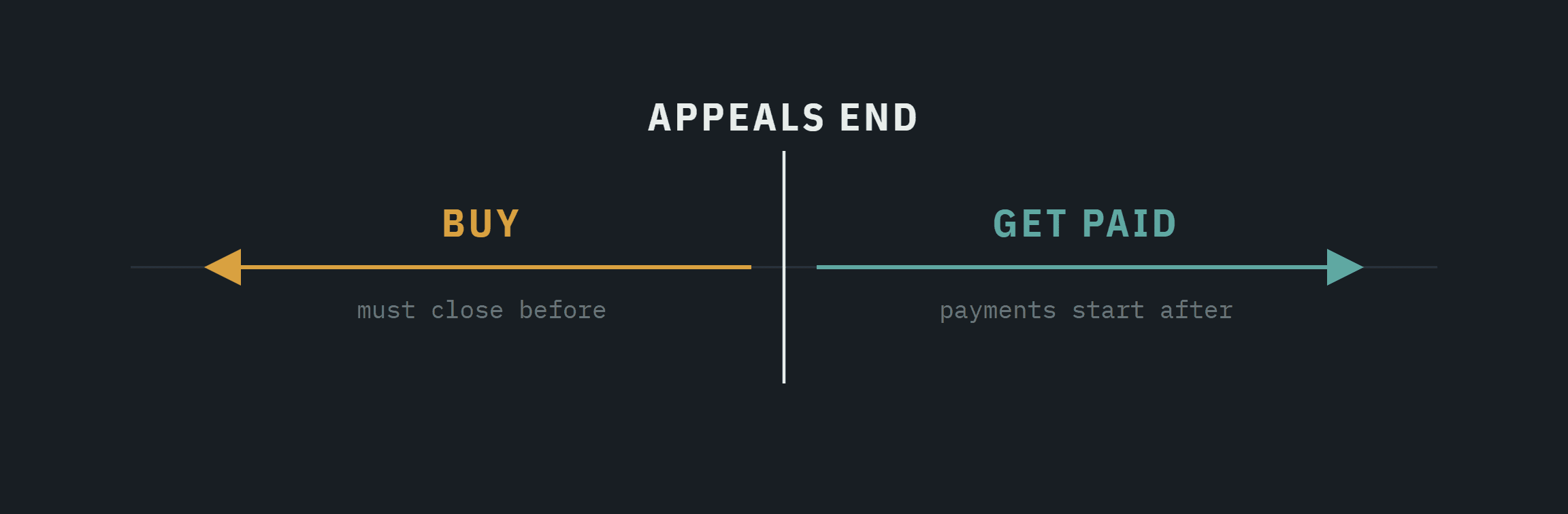
If you filed, you have a Claim ID sitting in the administrator's database, whether you remember it or not. The money was set up as equal annual payments over 10 years. None have gone out yet. Eleven appeals are still pending, and nothing gets paid until all of them are finished.
What is the House Settlement, and who actually qualifies?
House v. NCAA is the case that ended the NCAA's ban on paying college athletes for their name, image, and likeness. Judge Claudia Wilken approved the settlement on June 6, 2025. The lawsuit argued that the NCAA and the Power Five conferences had illegally blocked athletes from earning NIL money for years.
The settlement pays out in two pieces:
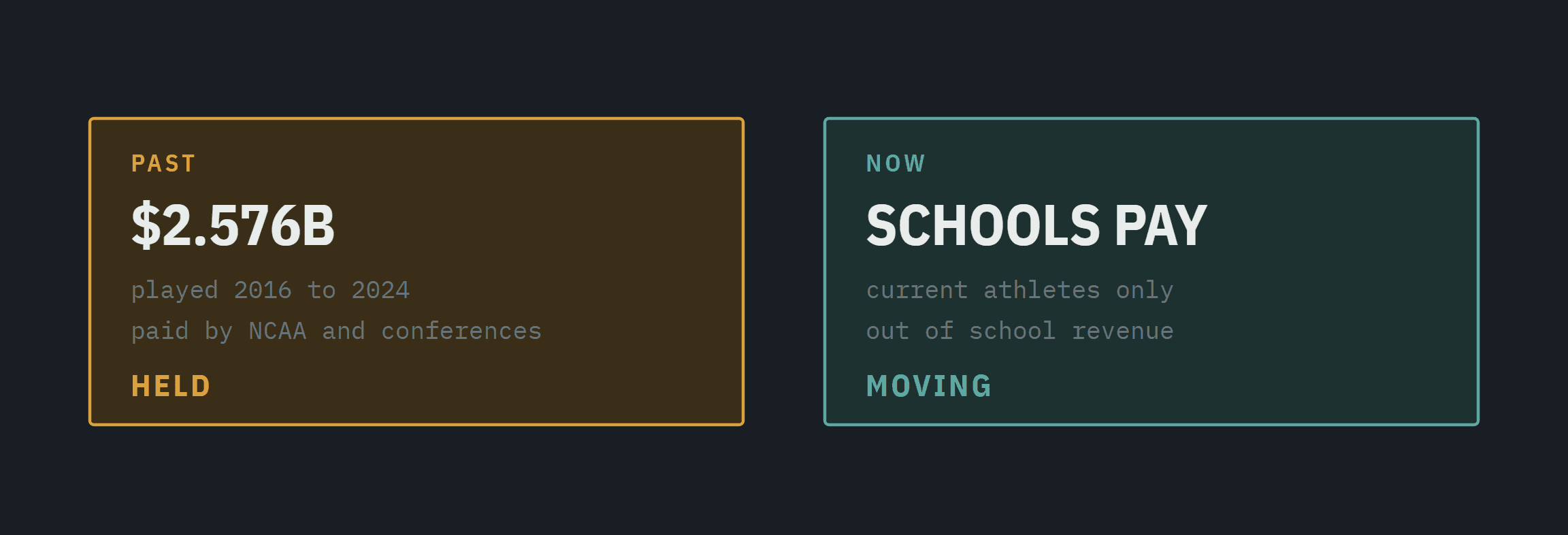
Back damages total $2.576 billion. Of that, the $1.976 billion NIL Settlement Fund is split three ways:
- Broadcast NIL, $1.815 billion. For FBS football and Division I men's and women's basketball players who competed before schools could pay them for broadcast appearances.
- Video game NIL, $71.5 million. For football and men's basketball players whose likeness appeared in NCAA-branded video games.
- Third-party NIL, $89.5 million. For athletes who lost outside NIL earnings after July 1, 2021.
The remaining $600 million is the Compensation for Athletic Services Fund. Ninety-five percent of it goes to Power Five football and basketball, split 75% football, 15% men's basketball, and 5% women's basketball. Your share depends on when you played, your school, your scholarship level, and your stats. The last 5% goes to athletes in other sports.
Press coverage sometimes rounds the total up to "$2.8 billion." The real damages fund is $2.576 billion, and everything comes out of it: attorneys' fees, administration, and taxes.
Revenue sharing going forward is separate. Schools that opt in can pay current athletes directly, out of their own revenue. It has nothing to do with the fund above. If you have finished playing, this part is not your money.
The claim window closed on October 1, 2025. If you filed by then, you are in the system. If you never got a notice and think you qualify, call the administrator rather than assume you were forgotten.
How do I find my Claim ID and PIN?
The administrator is Verita, working this case under the name College Athlete Compensation. It sent every class member a Claim ID and PIN in 2024 and 2025, by email and by postcard. They went to whatever address your school had on file. If you filed a claim, that ID still works.
- Search your inbox including spam and promotions, for "House Settlement" or "College Athlete Compensation." Official notices come from collegeathletecompensation@e.veritaclaims.com.
- Check your mail for a postcard from 2024 or 2025. If you have moved, call your school and ask which address they have for you.
- Log in at veritaconnect.com/NCCO_AEL/Claimant/LogInSelect.
- Lost your ID, or never got one? You can log in with your NCAA Eligibility Center (EC) ID instead. That is the number you got when you first registered as a recruit.
- Still stuck? Call 1-877-514-1777.
- Or write to this address: House v. NCAA Settlement Administrator, P.O. Box 301134, Los Angeles, CA 90030-1134.
The official site is collegeathletecompensation.com. It is the only site that should ever ask for your Claim ID or PIN. collegeathletecompensation.com.
When will NCAA House Settlement payments start?
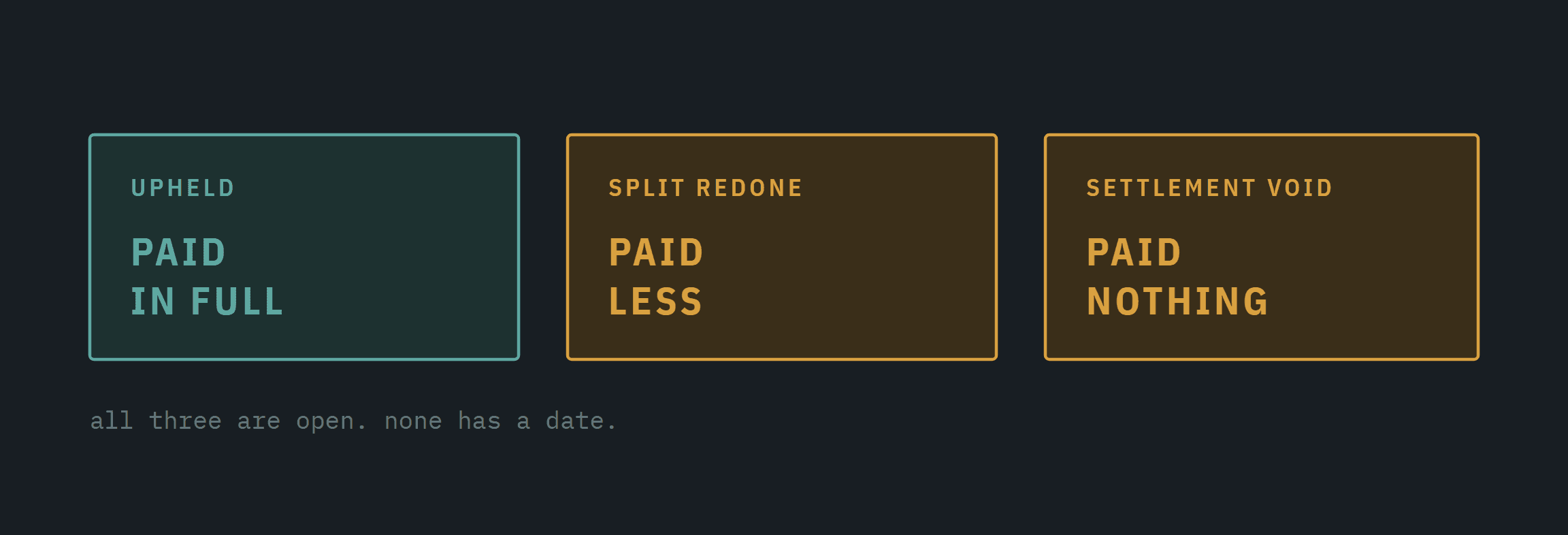
No one has been paid yet.
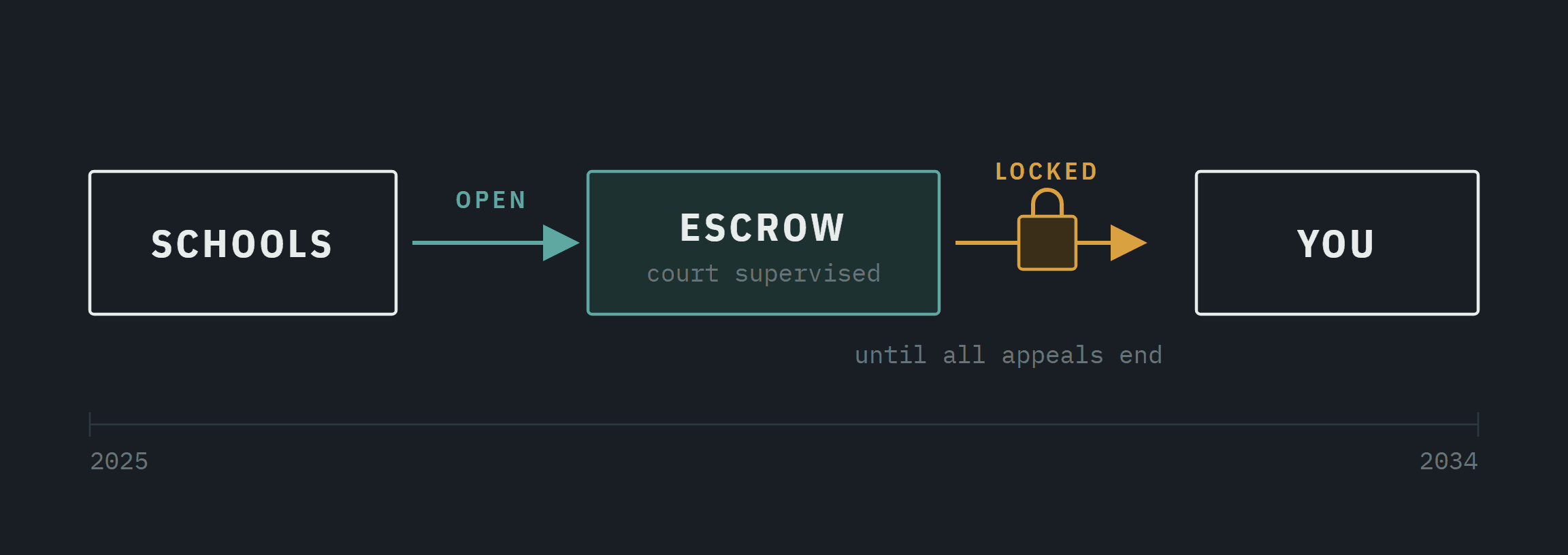
Money goes into an escrow account that the court supervises. The schools and conferences pay into it once a year, on a schedule that runs to 2034. The appeals do not change that schedule. What they hold up is the next step: nothing can leave that account until every appeal in the case is finished.
There are 11 appeals, filed in two waves. Six say the damages were divided unfairly, mainly that the split shortchanges women. The other five challenge something different. They are aimed at the new limits on squad size, and at the payments schools now make to current athletes.
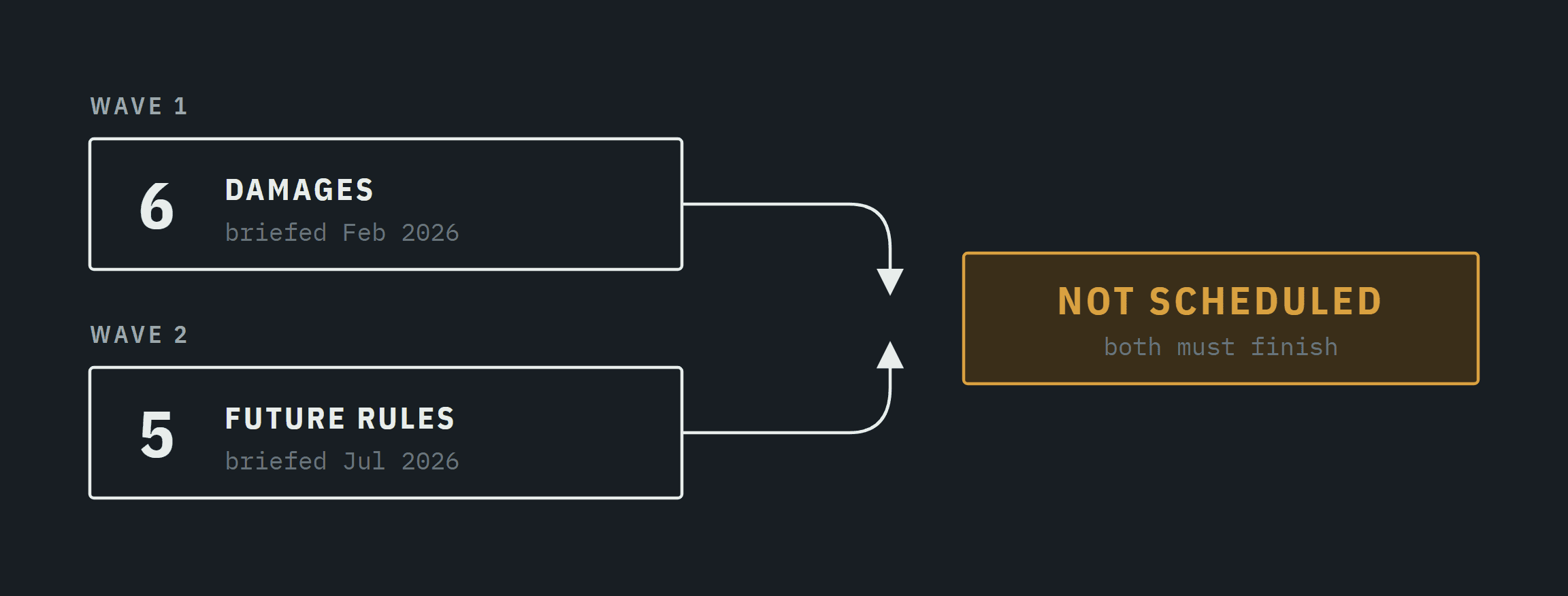
Both groups finished filing their arguments by July 2026. The settlement website now says the court hearing on the appeals will take place on December 7, 2026 in San Francisco. A decision before the end of 2026 is unlikely, and the distribution date has not been set.
Official settlement website: appeal hearing and distribution status
Nobody can tell you the date. Not the administrator, and not the lawyers running the case. When payments do start, the court-approved notice says they come once a year for ten years, in equal amounts.
What is appealed, and what really matters?
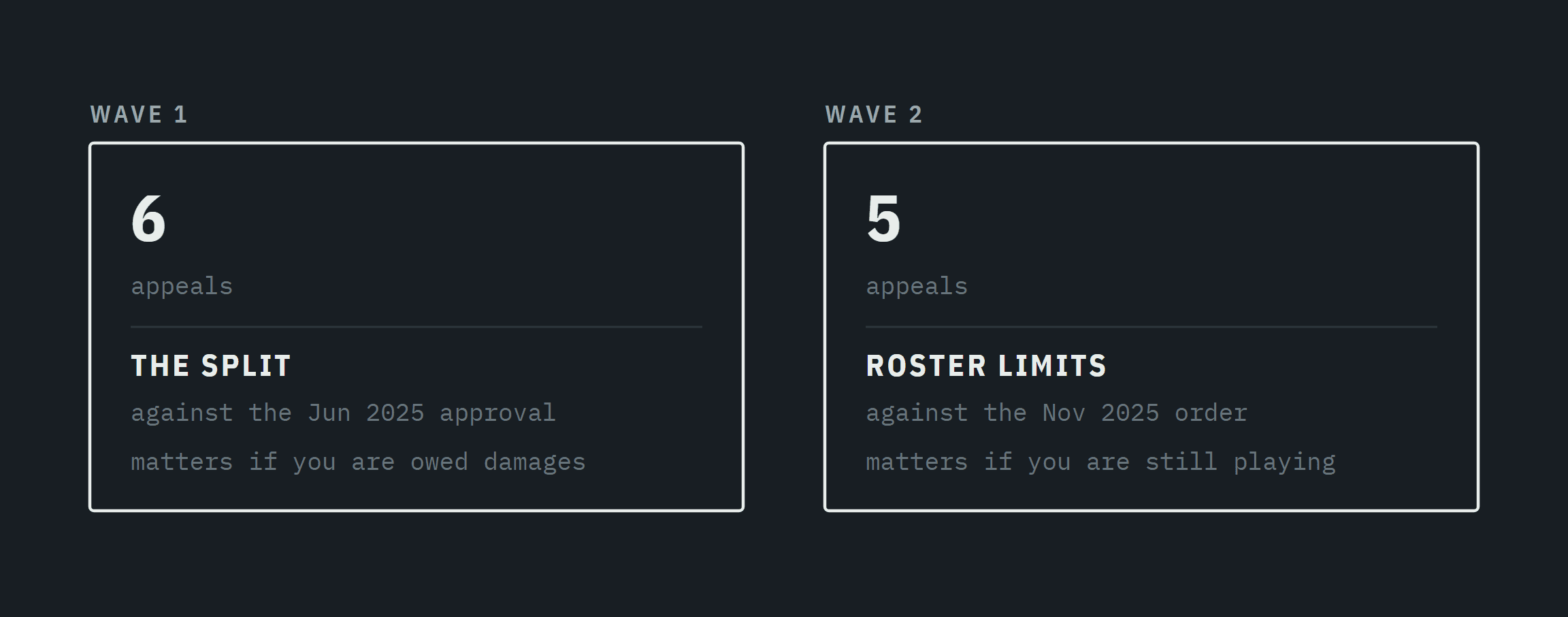
All six approval appeals challenge Judge Wilken's June 6, 2025 approval. They say the money was divided wrongly.
They disagree about who got shortchanged. Three say it was female athletes. One says it was football and basketball players. One says it was the players without scholarships.
Between them they filed five written arguments, because one pair put their names on someone else's rather than write their own.
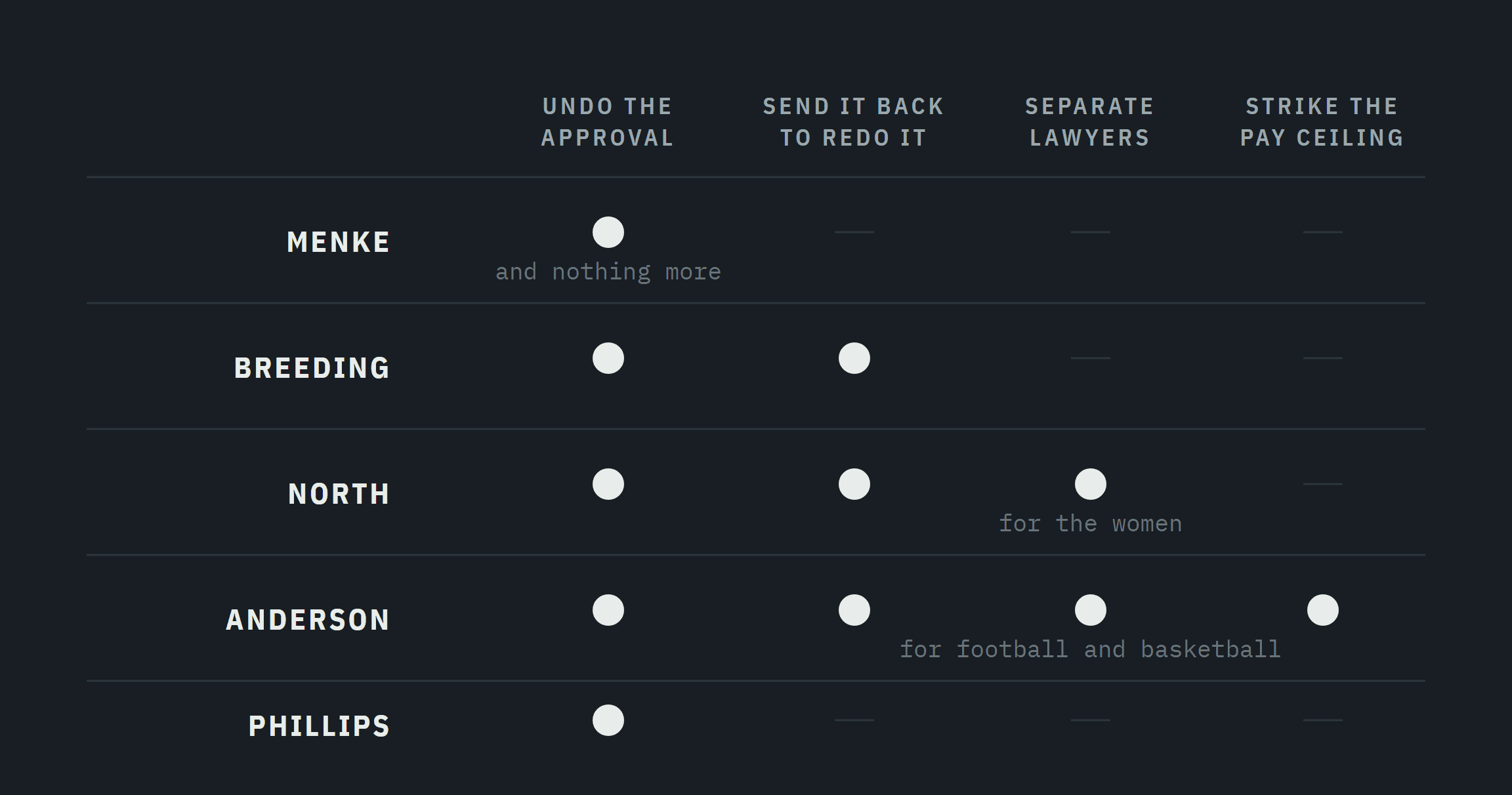
The estimate that set the size of the pots is in the plaintiffs' expert filing. The broadcast pot, $1.815 billion, is the largest of them, and it was based on how much each group was calculated to have lost:
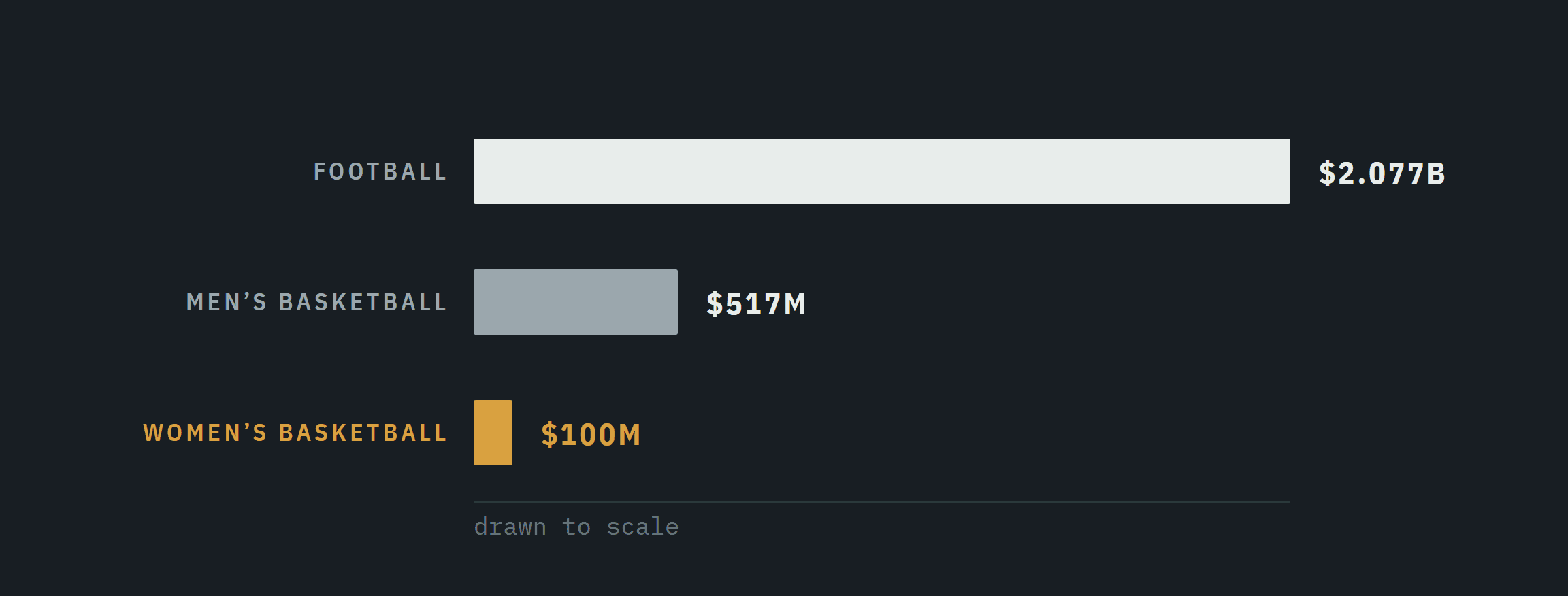
The money is divided along those same lines, in proportion to sport, conference, and years played. In the smaller video game pot, the line for women's basketball is blank.
Judge Wilken overruled these objections. Her reason was that the objectors had not shown any authority that Title IX applies to how damages get distributed. That is the ruling now on appeal.
Argument about Title IX
Title IX is a federal law from 1972. In one line: a school that takes money from the federal government has to treat its male and female students equally, and sports count.
In practice that mostly comes down to money. If 47 percent of a school's athletes are women, then something close to 47 percent of the athletic scholarship money is supposed to go to women. Not to the dollar, but close. It is the reason American colleges have women's teams on the scale they do.
Title IX applies to schools, because schools take federal money. It does not apply to conferences like the SEC or the Big Ten.
The question all of this turns on
To work out how big each pot should be, someone had to answer a question with no real answer. If the NCAA had never blocked these payments, who would have paid the athletes instead?
The economist who did the math said the conferences would have. Conferences are not covered by Title IX. So the moment that answer was chosen, the equal-treatment rule was out of the calculation.
The deal that actually got signed says the schools pay. Schools are covered.
Judge Wilken never said which of those is right.
Menke: the new setup is illegal too
Ten women who rowed, played volleyball, or swam and dove, at Yale, George Washington, Oregon State, Arizona State, and Temple.
Their first argument is the Title IX one above. Their second is about what the settlement does going forward.
Under it, every school agreed to the same ceiling on what it can pay its athletes. The NCAA can block some outside endorsement deals. The number of players allowed on a roster is capped. Menke's point is that rival schools agreeing on a maximum they will pay is the same conduct the athletes sued over in the first place.
Judge Wilken never weighed any of that. She said those limits are not automatically illegal, so she did not have to. Menke says a judge does have to, and that the Supreme Court has already said so.
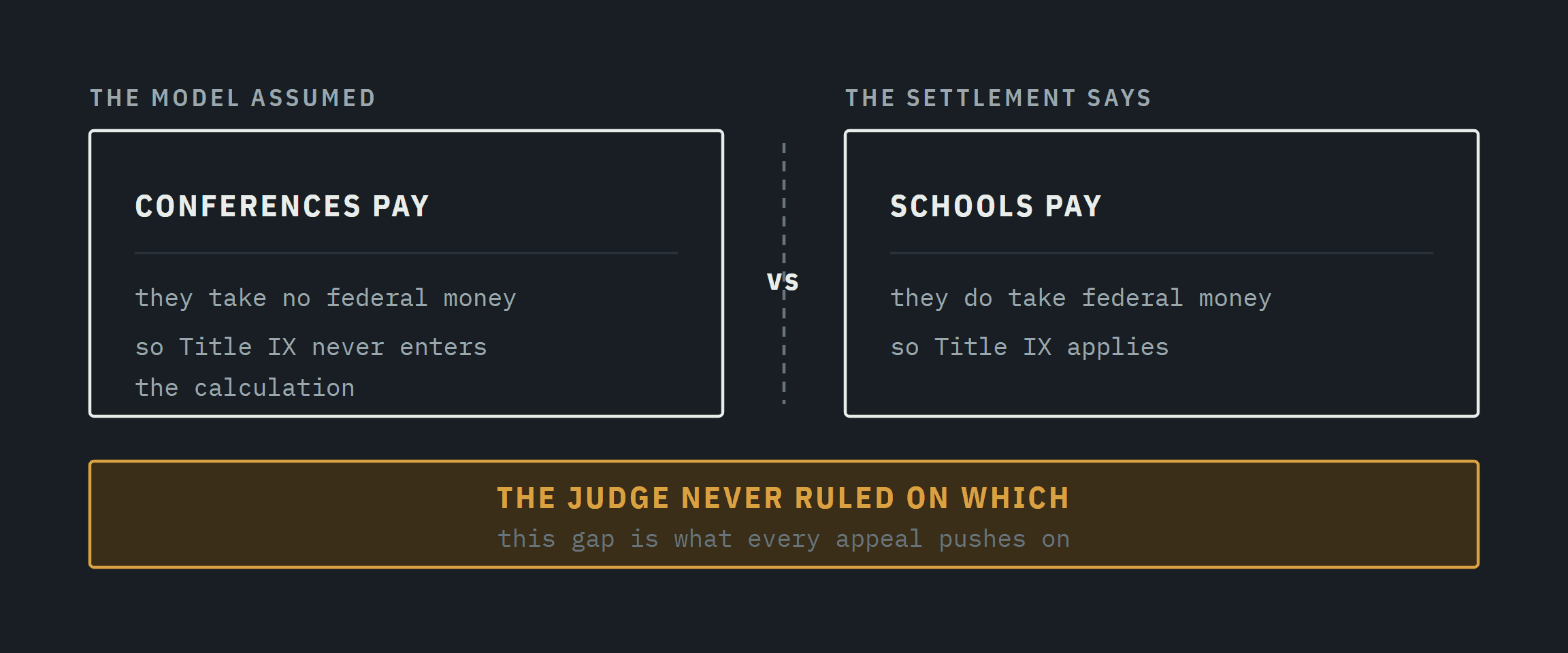
What they want: The whole approval undone. They do not offer the court anything smaller.
Breeding: the judge never dealt with their objection
Eight women who played Division I sports. They split the money in two.
$600 million of it is paid by schools straight to athletes. Schools are covered by Title IX, so that part needs no argument at all.
The rest is the broadcast money, the part calculated as though conferences would have paid it. Their answer to that is a single fact. Conferences have never given an athlete a dollar of financial aid. By their count, $1.1 billion of the $2.576 billion sits on the wrong side of that assumption.
Their second point has nothing to do with Title IX. They filed an objection. Judge Wilken did not rule against it. Her order never mentioned it. She also would not let their lawyer speak at the hearing. Either of those, they say, is enough on its own to undo the approval.
What they want: The approval undone and the case sent back.
North: lawyers running the case had a conflict
Four former athletes, including a lacrosse player who won a national championship at Boston College.
Their target is the lawyers. In a case like this one, a small group of lawyers acts on behalf of every athlete covered by it, including the ones who never heard of them. North says those lawyers told the economists to leave Title IX out of the math, never raised it as a claim, and then asked for a fee worth about four times what every woman in the case is getting put together.
They also object to what accepting the money costs you. It means giving up your right to sue your school for treating women's teams unequally, on a question nobody in this case ever argued.
What they want: The approval undone, or sent back with orders to apply Title IX. And new lawyers for women athletes, if the conflict is real.
Anderson: the football and basketball players are the ones being shortchanged
A former Seton Hall basketball player. Two former college wrestlers, Sebastian Rivera and Ryan Deakin, put their names on his filing, which is why two case numbers carry one argument.
This one points the opposite way from the three above.
Anderson says the players the money came from, football and men's basketball, are still being paid far less than an open market would pay them, and that the settlement locks that in for another decade and possibly two. He writes that most of those players are Black, and he calls the arrangement wage theft.
He also raises something nobody else does. When a case like this is settled, everyone covered by it has to be told, by mail and email, so they can file a claim or object. Anderson says that outreach never went through Black media, that Black athletes are the majority in the sports the money came from, and that many of them never got the message at all.
What they want: The approval undone. The group split up so football and basketball players get their own lawyer, separate from everyone else's. And the ceiling on future payments struck out.
Phillips: the walk-ons were cut out
A former Arkansas football walk-on, meaning a player on the team without an athletic scholarship. He is arguing his own case, with no lawyer.
His complaint is that players like him were left out of the money almost entirely. Walk-ons were excluded from the broadcast pot and from the pot that pays for athletic services. So were athletes whose claims reached further back in time.
He makes one argument nobody else makes. Public universities are arms of the government, and this settlement lets them keep restricting what athletes can say and who they can associate with. He says that is a free speech problem, and that the judge approved the deal without ever looking at it.
Like Breeding, he says he was not allowed to be heard at the hearing.
What they want: The approval overturned. His brief asks the court to step in without spelling out a fallback.
What does this mean for your claim?
Who wins decides how the money gets divided. It does not decide whether the money is there.
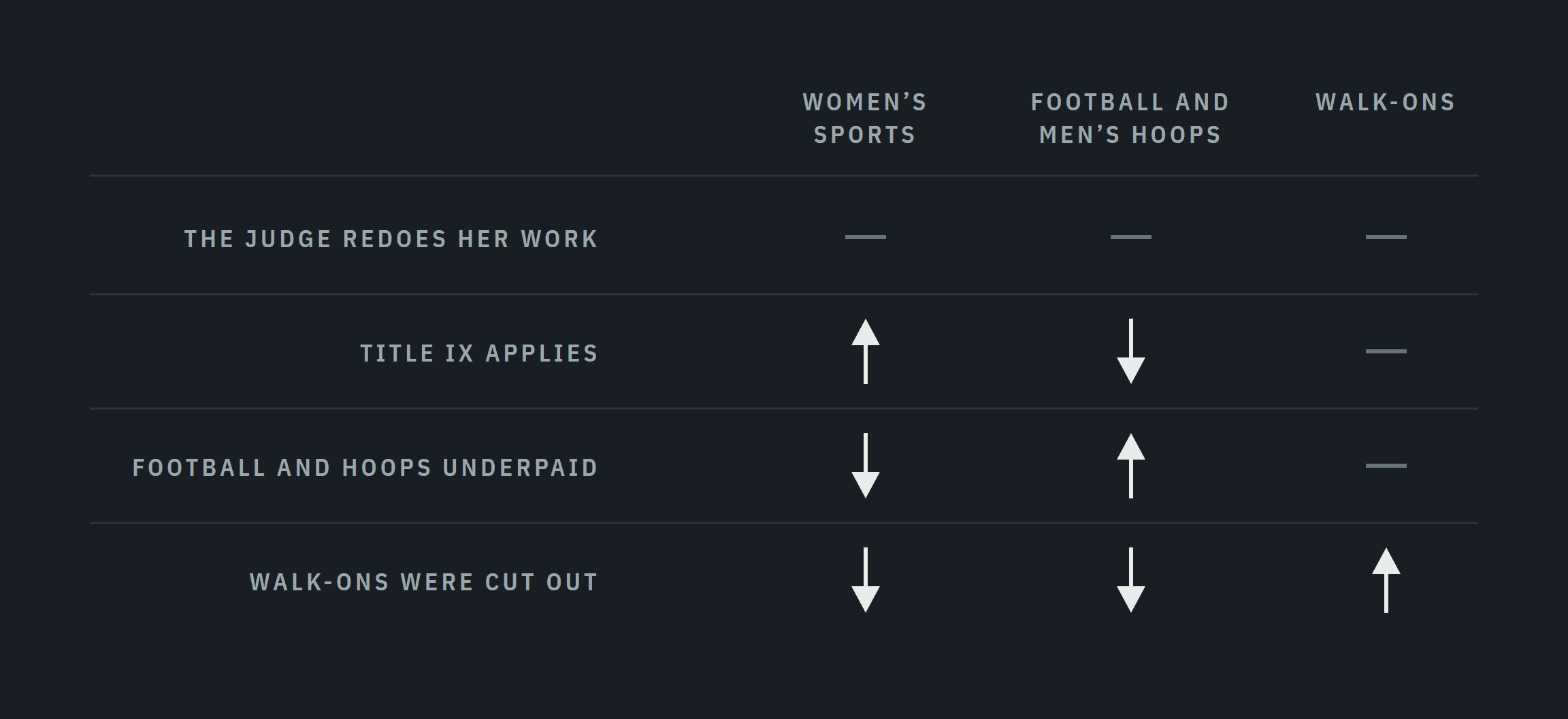
These appeals pull in different directions.
- If Breeding wins on the point that the judge never dealt with their objection, the case goes back so she can do the part she skipped. Your share stays the same. Your wait gets longer.
- If the women athletes' arguments win and the split is recalculated, Power Five football and men's basketball get less. Everything else gets more.
- If Anderson wins, it moves the other way. He is arguing that football and basketball players were underpaid, not overpaid.
- If Phillips wins, a group that currently gets nothing has to be paid something, and it comes out of the same pot as everyone else.
- If the arguments against the new rules win, the effect reaches past this money to the rules themselves, for everyone still playing.
Weigh any offer you get against which of those you think is coming.
What are the five appeals about the new rules?
These challenge a different ruling, from November 13, 2025, which let the settlement's forward-looking rules stay in force for the year. Those rules cover roster limits, athlete status, and the payments schools make to current athletes.
They are asking the appeals court to set that ruling aside. They also want the court to appoint new class counsel if the current lawyers cannot represent them properly. Most of the complaint is about roster limits. The new rules replaced caps on scholarships with caps on squad size, and athletes lost places.
What happens if the settlement falls apart?
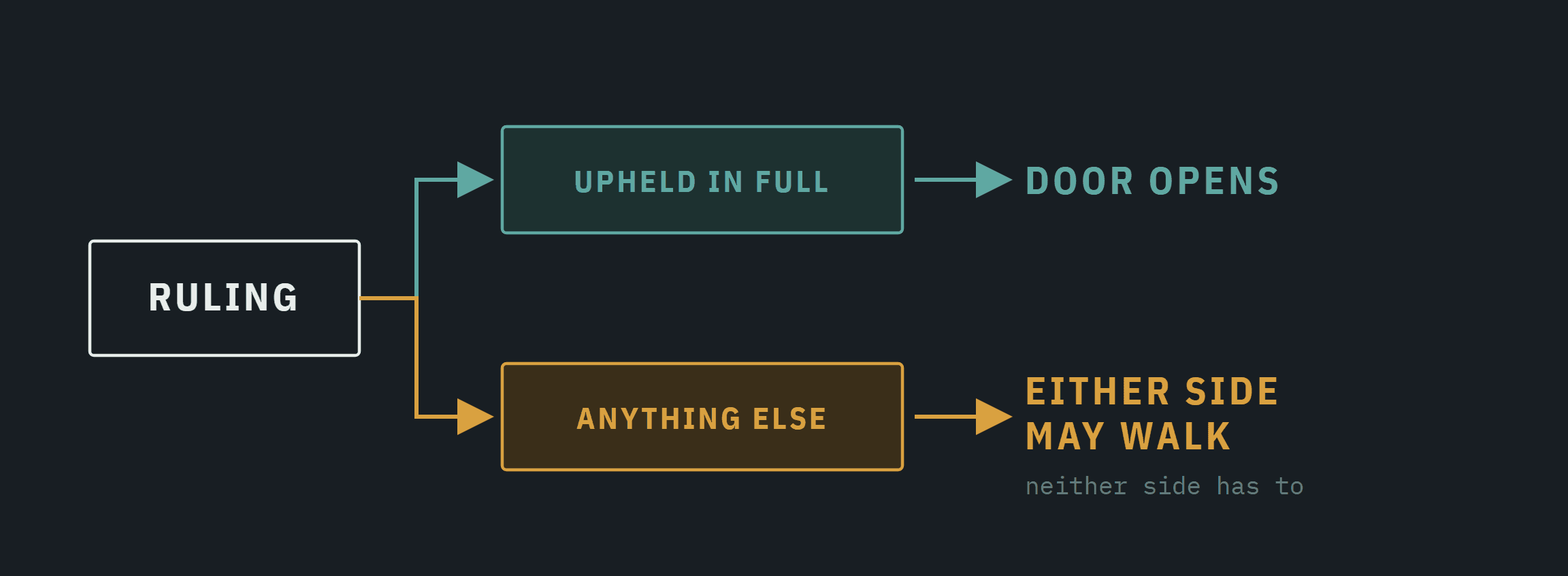
Both of those outcomes assume the settlement is still standing.
The agreement only starts running if the ruling is upheld in full, and after that there is a further window for anyone who wants to take it to the Supreme Court. If the ruling is not upheld in full, the schools' side and the athletes' lawyers each get the right to walk away. A ruling that only sends the case back to redo the split counts. Neither side is obliged to do that. If one of them does, the settlement is void and there is no fund left to pay anyone from.
The eleven appeals
| Case No. | Appellant(s) | Date | Source |
|---|---|---|---|
| 25-3722 | Breeding, Drumm, Appleman, Wannemacher, Hass, Johnson, Baron, Arnold | Jun 12, 2025 | Tracker · CL 17248915 |
| 25-3835 | North, Nirundorn, McCabe Ernst, Baker | Jun 18, 2025 | CL 70685816 (9th Cir. docket) |
| 25-4137 | Tyler Phillips | Jul 3, 2025 | CL 17248915 (Dkt. 991) |
| 25-4150 | Sebastian Rivera, Ryan Deakin | Jul 3, 2025 | CL 17248915 |
| 25-4190 | Menke, Dunn, Levy, Moore, Bishop, Barr, Yarich, Holp, Forman, Leak | Jul 8, 2025 | CL 17248915 (Dkt. 992) |
| 25-4218 | K. Braeden Anderson | Jul 9, 2025 | Tracker — number listed, appellant mapping not directly confirmed |
| 25-4185 (withdrawn) | Thomas Castellanos | Jul 29, 2025 | CL 17248915 (Dkt. 995) |
| 25-7461 | Piper Whitty, Ariana Amoroso | Nov 26, 2025 | Tracker |
| 25-7467 | Katherine McCabe Ernst | Nov 26, 2025 | Tracker |
| 25-7469 | Scott Iannaccone, Abigail Leight | Nov 2025 | Tracker |
| 25-7824 | Reid Hinds Macdonald | Dec 12, 2025 | Tracker · CL 17248915 (USCA order 1/28/2026) |
| 25-7869 | Gracelyn Laudermilch | Dec 2025 | Tracker · CL 17248915 |
Note on 25-7824: the district court docket records Gracelyn Laudermilch's notice of appeal against 25-7869, while an opening brief under her name sits on 25-7824. The two records do not line up.
Look any of these up by case number at CourtListener or through PACER. College Sports Litigation Tracker / CourtListener docket 17248915 / CourtListener Ninth Circuit docket 70685816 / PACER.
Why are athletes selling their claims before the payout?
Because the wait has no end date. If you need cash now, selling to a buyer who pays a lump sum is a real trade-off.
A few things are worth knowing before you sign anything, whoever the buyer is.
- Discount is by design. Buyers are taking on the wait and the appeal risk. Offers commonly land around 40 to 50% of face value, so a claim estimated at $125,000 might draw an offer near $60,000. Compare that against what the money is worth to you today. Do not compare it against the full amount you were first told you would get.
- Taxes can bite. Depending on how the sale is structured, you can owe tax on the full original value of the claim, not on the smaller amount you actually received. Ask the buyer how the deal is structured, and get independent tax advice before you sign.
- You get a short window to change your mind. Most agreements include a rescission period, often around ten days. After that the sale is binding.
What comes out before you get paid?
The number on your portal is not what lands in your account. Fees and costs come out of the same $2.576 billion, proportionally, before anyone is paid.
The notice the court approved puts it to athletes this way:
your lawyers will request, as part of the final approval of this Settlement, that the Court approve a payment of up to 20% of the $1.976 billion NIL Settlement Fund and up to 10% of the $600 million Compensation for Athletic Services Fund in attorneys' fees, plus the reimbursement of out-of-pocket expenses. These fees will be paid out over ten years so they are aligned with any payments
The approval opinion of June 6, 2025 puts numbers on those percentages. Class Counsel asked for $395.2 million from the NIL fund and $60 million from the compensation fund. The same motion asked for $9,081,356.70 in expenses, and service awards for the named plaintiffs, the largest of which were $125,000 each.
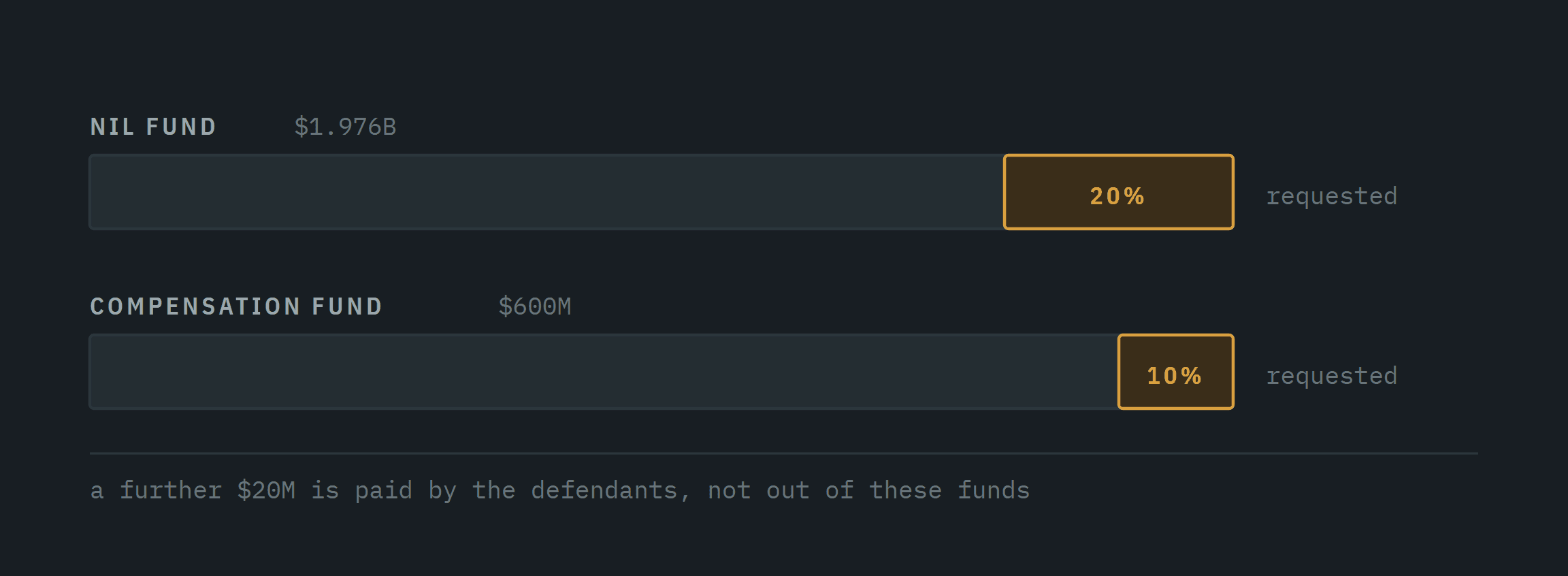
Your estimate is stated before all of that comes out, so what you actually receive is smaller. The fees are also paid out over ten years, on the same schedule as you, rather than taken in one go at the start.
None of these amounts have been approved yet. The June 2025 opinion does not decide the fee request. It says the court will handle it in a separate order, and that the fee question does not hold up the settlement. So the figures above are what the lawyers asked for, not what they were given. If you come across a headline number for approved fees, it did not come from that opinion.
A further $20 million fee covers the forward-looking side of the settlement. That one is paid by the defendants. The court noted it "will not be taken out of funds that would otherwise go to settlement class members."
How should you check buyers before selling a House Settlement claim?
In September 2025 Judge Wilken signed an order aimed specifically at companies buying these claims. It rarely comes up in coverage of claim sales, and it gives you four things to check.
- You should get the tax warning twice. The court wrote the wording itself. It should reach you once in whatever material the buyer first sends you, and again with the sale agreement. If it only shows up once, or never, that buyer is not following the order. The warning says that with some deal structures you can owe income tax on the full amount you were entitled to, which can be more than the buyer paid you.
- Your sale gets reported to the fund. A buyer that wants to be paid straight out of the fund has to notify it in writing within 15 days of closing, and send a copy of the bill of sale you signed. If a buyer tells you the sale stays private between the two of you, that is not how this works.
- The indemnity form is not for you. The buyer signs one stating it gave you every required disclosure, with no misleading statements, no pressure and nothing left out. That form runs to the settlement administrator and the fund. If a sale goes badly for you, it is not what you would be relying on.
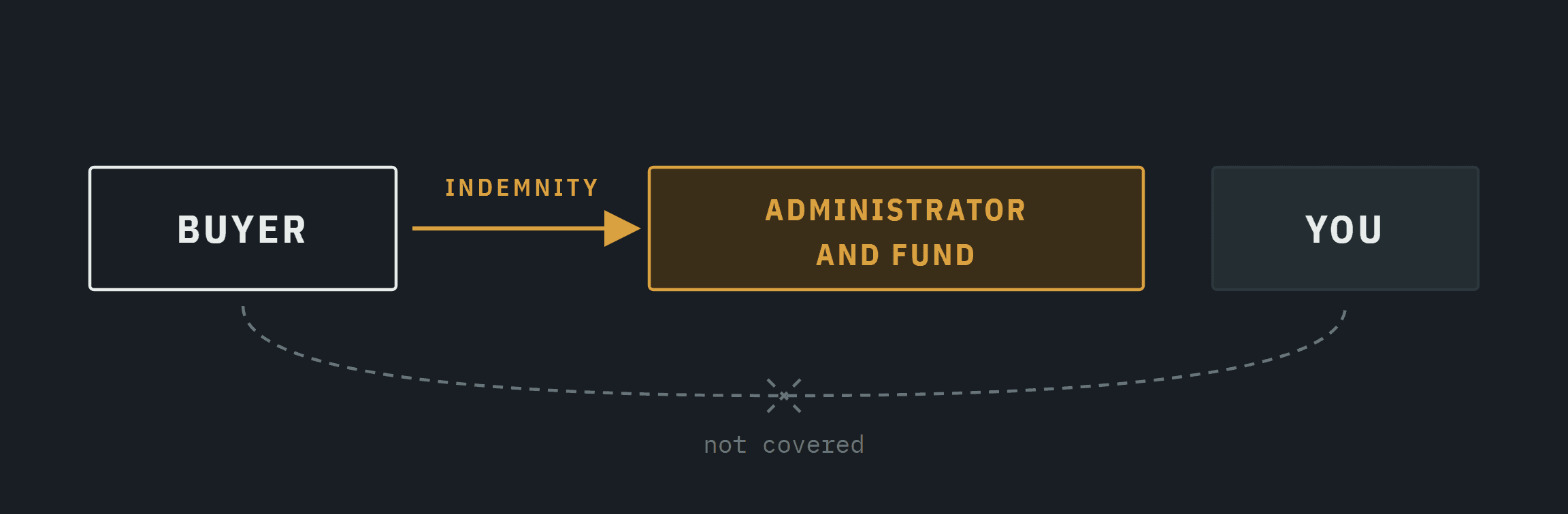
You can check a buyer with the people running the case. Class Counsel and the administrator said they would keep monitoring third-party buyers, and would send the order to any buyer that contacts them. The order also told Class Counsel to put an FAQ about the tax side of these sales on the settlement website.
None of that replaces having someone read your specific offer before you sign it.
One more thing, and it is not in your control. A buyer can only be paid directly from the fund if your sale closed before the appeals are over. That route shuts on the day they end.
If you are weighing an offer, our NCAA House Settlement claim page sets out how Paxtibi structures a direct purchase. No upfront fees, and no request for your settlement PIN. Use it to compare against anything else you have been offered.
How does Paxtibi buy NCAA House Settlement claims?
Paxtibi buys House Settlement claims directly. We are not a marketplace that matches you with unknown buyers. We are not a broker taking a cut of someone else's offer. You get a quote based on your actual claim. You decide whether it works. If it does, the sale closes at no upfront cost to you.
Get a no-obligation quote on our NCAA House Settlement claim page.
FAQ
How do I check my NCAA House Settlement claim status?
Log in at veritaconnect.com/NCCO_AEL/Claimant/LogInSelect. Use the Claim ID and PIN from your original notice, or your NCAA Eligibility Center ID if you no longer have them. Your dashboard shows your filed claim and estimated payment.
Is the House Settlement still being appealed?
Yes. Eleven appeals are pending, in two groups. Six challenge the June 2025 approval and the way the damages were divided. Five, filed later, challenge a November 2025 ruling that let the going-forward rules continue. Both groups finished filing by July 2026. The hearing on the appeals is set for December 7, 2026 in San Francisco, so a decision before the end of 2026 is unlikely. Nothing is paid out until every appeal is finished.
Can I still file a new House Settlement claim in 2026?
No. The deadline was October 1, 2025. If you think you were eligible but never got a notice, call the administrator at 1-877-514-1777. Do not assume a new filing window will open.
Is it safe to sell my House Settlement claim to a third party?
It can be, if you work with a direct buyer and understand the terms. Never give a buyer your Claim ID or PIN. Those are for the official portal only. Confirm how the deal is structured for tax purposes, read the rescission window in your agreement, and get independent advice before you sign. Offers are typically a fraction of face value, and the sale is usually final once the cooling-off period ends.