
When a company in the United States files for bankruptcy, creditors are not left guessing. The U.S. has one of the most structured bankruptcy systems in the world, and understanding how claims work is key to knowing whether, when, and how you might get your money back.
In this post, you will learn how creditor claims are processed, how different claim types are prioritized, and how the law is evolving to deal with complex cases, including the FTX crypto exchange collapse.
What is a bankruptcy claim?
A bankruptcy claim is a creditor's formal request for payment from the assets of someone who has filed for bankruptcy. Whether you're a supplier, employee, customer, or investor, if you're owed money when a company or individual goes bankrupt, you become a creditor, and to have any chance of recovery, you must file a claim.
Legally, a claim is defined very broadly. In U.S. law, for example, it is any "right to payment" whether the amount is known, disputed, or even conditional (U.S. Bankruptcy Code Section 101(5)).
How the Bankruptcy Process Works
While bankruptcy procedures vary between countries, the general steps are similar:
- A bankruptcy case is filed, and the debtor's assets become part of a "bankruptcy estate."
- A neutral trustee or administrator takes control of the assets.
- Creditors are notified and must file claims by a set deadline.
- Claims are verified or disputed in a review process.
- Assets are sold, and proceeds are distributed to creditors in order of priority.
- The case is closed, and remaining discharged debts are wiped out.
In most cases, there is not enough money to pay all creditors, especially those in lower-priority classes. For example, general unsecured creditors receive only partial repayment in many cases.
Why Bankruptcy Claims Matter
Understanding your position in a bankruptcy case isn't academic; it can mean the difference between recovering your money or losing out. This is especially true today, where more financial relationships take place on digital platforms.
That uncertainty can last for years, as seen in cases like Mt. Gox, where creditors waited years for even partial recovery.
What happens when platforms like crypto exchanges go bankrupt? Are account holders treated like customers or creditors?
A Snapshot of the U.S. Bankruptcy System
Bankruptcy in the United States is governed by federal law. The most common bankruptcy types are:
- Chapter 7: Liquidation of assets.
- Chapter 11: Reorganization, typically used by businesses aiming to continue operations.
When a bankruptcy is filed, a bankruptcy estate is created. This estate holds all of the debtor's legal possessions. Creditors then line up to make claims against this estate.
How Claims Are Filed in the U.S.
To participate, creditors file a Proof of Claim (Form 410) with the Bankruptcy Court. This form identifies:
- How much the debtor owes you.
- Whether your claim is secured by collateral.
- Whether it qualifies for priority treatment.
After filing, claims may be reviewed, approved, or objected to by the debtor, other creditors, or the trustee. Disputed claims are resolved by the court.
More on claim filing: U.S. Courts Bankruptcy Basics.
Who Gets Paid First? The U.S. Priority System
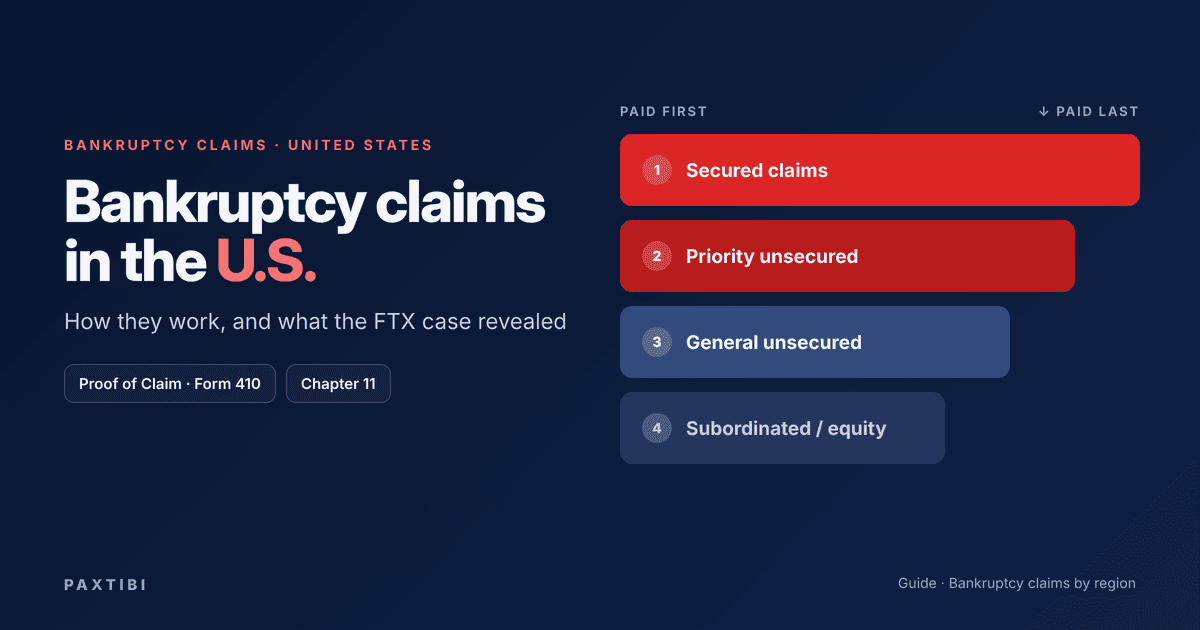
The U.S. follows a strict hierarchy for paying creditors. If there is not enough money to pay a higher tier in full, lower tiers receive nothing.
- Secured Claims: Mortgages and other collateral-backed loans are paid first from the assets tied to the debt.
- Priority Unsecured Claims: Includes employee wages, alimony, and taxes. These must be paid before general unsecured creditors. (11 U.S.C. Section 507).
- General Unsecured Claims: Credit cards, customer accounts, and most vendor invoices.
- Subordinated Claims or Equity: Paid only if anything remains.
Digital Platforms and Bankruptcy: The Case of FTX
In November 2022, FTX, one of the world's largest cryptocurrency exchanges, filed for Chapter 11 bankruptcy in Delaware. Millions of customers suddenly found themselves unable to withdraw funds. Many were surprised to learn that, under U.S. bankruptcy law, crypto platform users are often treated as general unsecured creditors.
Unless a company explicitly holds customer assets in a legal trust or segregated account, those assets, including cryptocurrency, are viewed as company property and become part of the bankruptcy estate.
What Happened in the FTX Case?
- Customers argued that the crypto they deposited was held on their behalf, not by FTX.
- Initial court findings showed that FTX commingled customer crypto with corporate assets.
- FTX’s Chapter 11 plan has paid Convenience claims a cumulative 120% and the main customer classes (5A and 5B) 105% of allowed claims as of July 2026.
More details: FTX release, July 17, 2026 and CoinDesk report on customer priority status.
Key Takeaways
- Filing a claim is critical if you are owed money by a bankrupt U.S. entity.
- Your recovery depends on the type and priority of your claim.
- Bankruptcy courts and trustees follow strict rules, but cases like FTX show how digital finance is testing the system.
You can also sell your FTX claims.